Book Appointment Now

6 Best Hard Drive Readers in 2026
A hard drive reader connects a bare internal hard drive to your computer over USB, turning it into an external drive. If you have upgraded a laptop or PC and have an old drive lying around, a hard drive reader is the simplest way to get your files back — no reinstalling, no extra PC needed.
If you are searching for the best laptop hard drive reader, a SATA to USB adapter, or a simple way to read an old internal hard drive on another computer, this guide covers it all. We compare the 6 best hard drive readers, adapters, and docking stations for 2.5-inch laptop drives and 3.5-inch desktop drives, and explain how to choose the right one for SATA, IDE, HDD, and SSD drives.
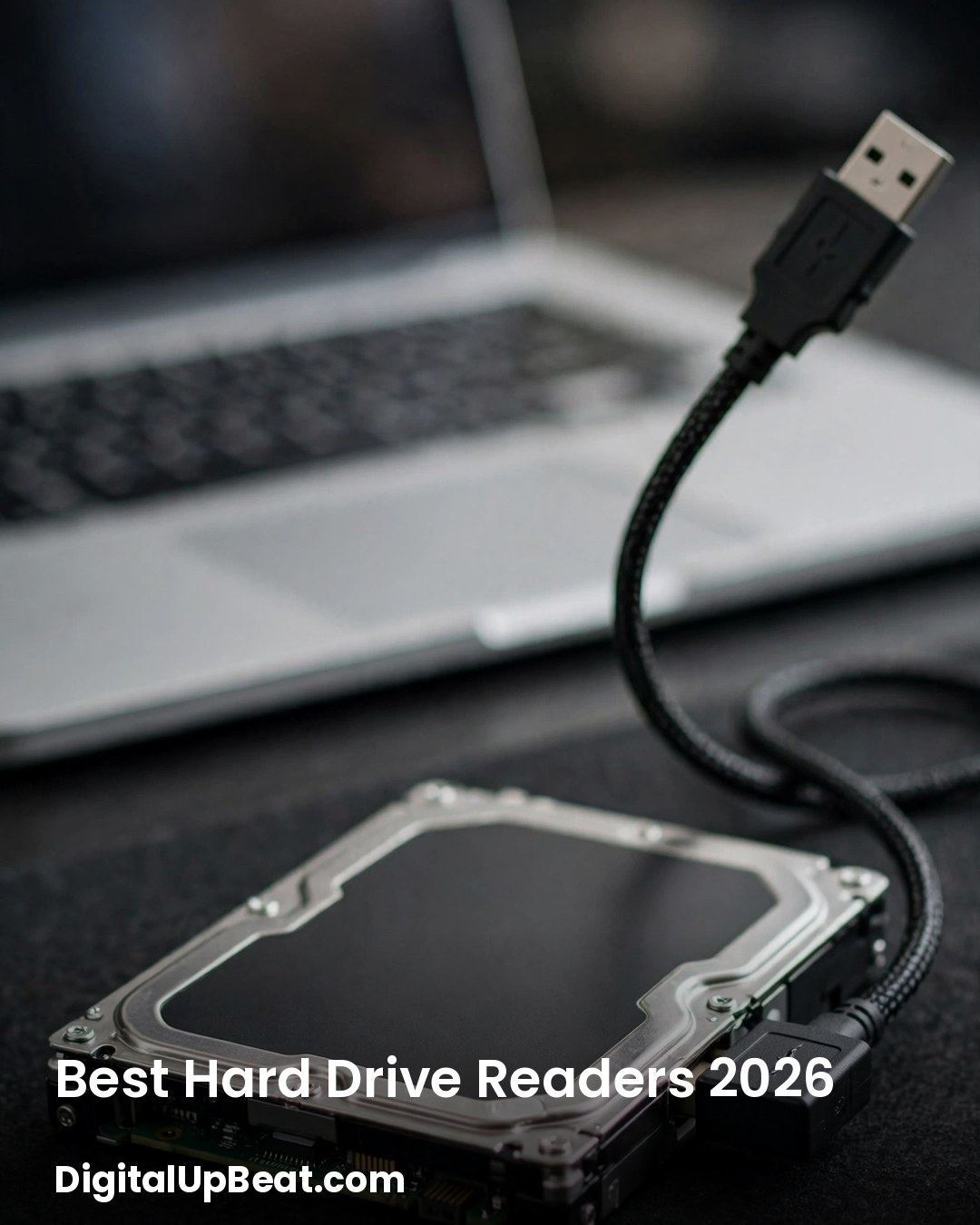
What Is a Hard Drive Reader?
A hard drive reader is a device that lets you access a bare internal hard drive — the kind that normally lives inside a laptop or desktop — as if it were an external USB drive. Plug the drive into the reader, plug the reader into a computer, and the drive shows up in your file explorer, ready to read from and write to.
Readers come in three main forms. An adapter cable is the smallest and cheapest option: a short cable with a SATA or IDE connector on one end and USB on the other. An enclosure is a protective case that turns a bare drive into a permanent external drive. A docking station sits on your desk and lets you drop bare drives in and swap them in seconds, which is ideal for backups and working with several drives.
Most people buy a hard drive reader for one of two reasons: recovering files from a dead laptop, or reusing old drives for extra storage. Both work the same way — the reader does not care whether the drive came from a laptop or a desktop, as long as the connector and size match.
6 Best Hard Drive Readers in 2026
These are the 6 best hard drive readers for most people in 2026, from a pocket-size laptop hard drive reader to a powered docking station for desktop drives. All six are plug and play on Windows and Mac, with no drivers needed in most cases.
| Reader | Type | Best for | Drives |
|---|---|---|---|
| Sabrent USB-DS12 | SATA/IDE to USB converter | Old IDE and SATA drives | 2.5″ / 3.5″ HDD & SSD |
| Unitek USB 3.0 adapter kit | IDE/SATA adapter kit | One-touch backup | 2.5″ / 3.5″ IDE & SATA |
| StarTech USB3S2SAT3CB | SATA to USB cable | Laptop drives on the go | 2.5″ SATA |
| Sabrent EC-DFLT | Lay-flat docking station | Swapping several drives | 2.5″ / 3.5″ SATA |
| WEme USB 3.0 adapter | SATA converter adapter | Budget all-rounder | 2.5″ / 3.5″ SATA |
| UGREEN SATA to USB cable | SATA to USB cable + power | Data recovery | 2.5″ / 3.5″ SATA |
#1. Sabrent – Best Internal Hard Drive Reader
View on Amazon
Specifications
[amazon box=”B0758RP5V8” template=”horizontal” ]
Review
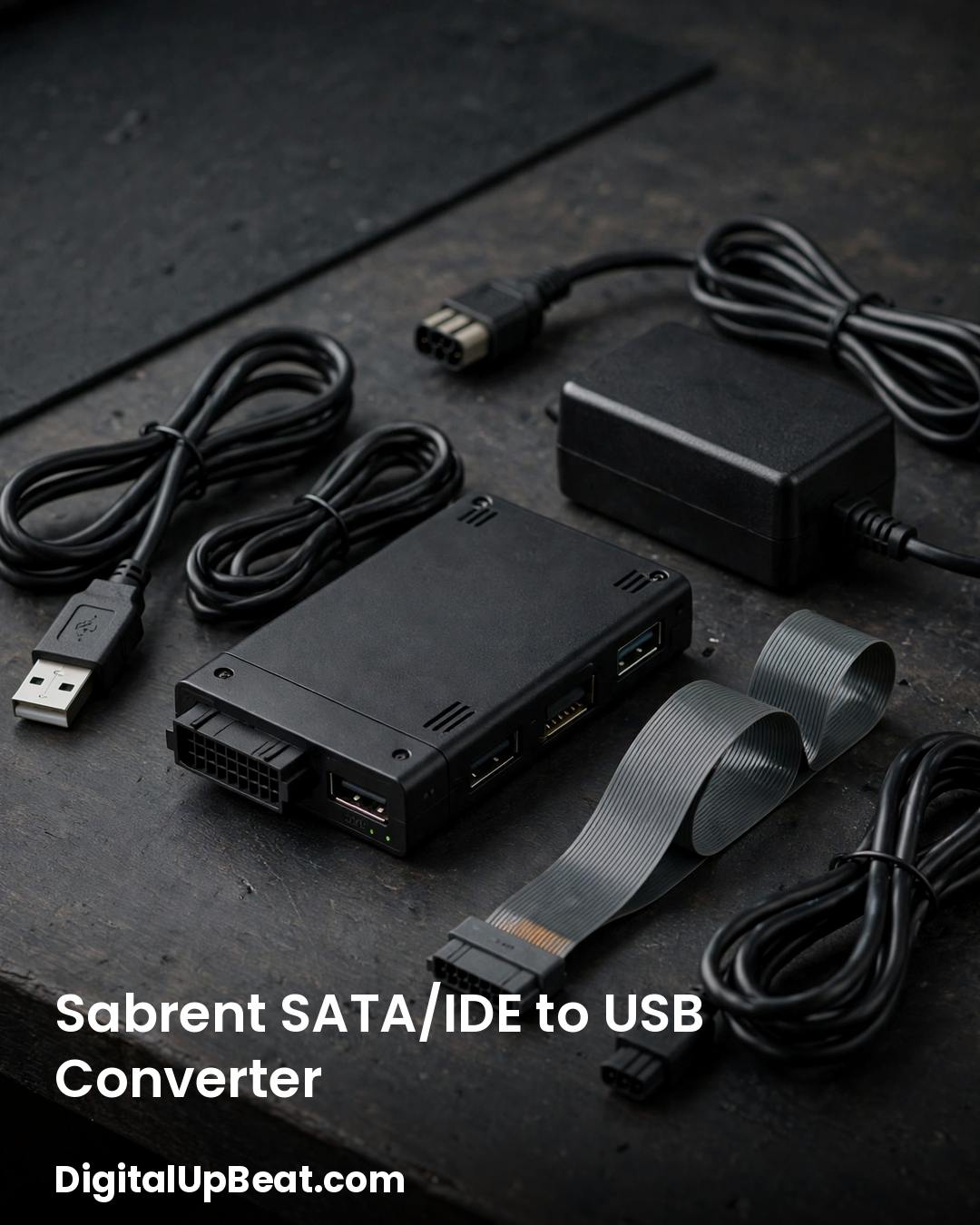
The Sabrent USB 3.0 to SSD/SATA/IDE converter (USB-DS12) is the most flexible hard drive reader in this list. It reads both SATA and IDE drives — including old 2.5-inch laptop drives, 3.5-inch desktop drives, and even 5.25-inch optical drives — through a single USB 3.0 connection, and the included power supply means 3.5-inch drives spin up without a problem.
Setup is plug and play: connect the drive, plug in the power adapter, and connect the USB cable. There is no rebooting and no driver to install in most cases, and LED activity lights show when the drive is being read. If you have a mix of older IDE drives and newer SATA drives, this is the most versatile way to read an old hard drive on a modern computer.
Check Price At Amazon
#2. Unitek – Best SSD Hard Drive Reader
View on Amazon
Specifications
[amazon box=”B00EHDTRJ6” template=”horizontal” ]
Review
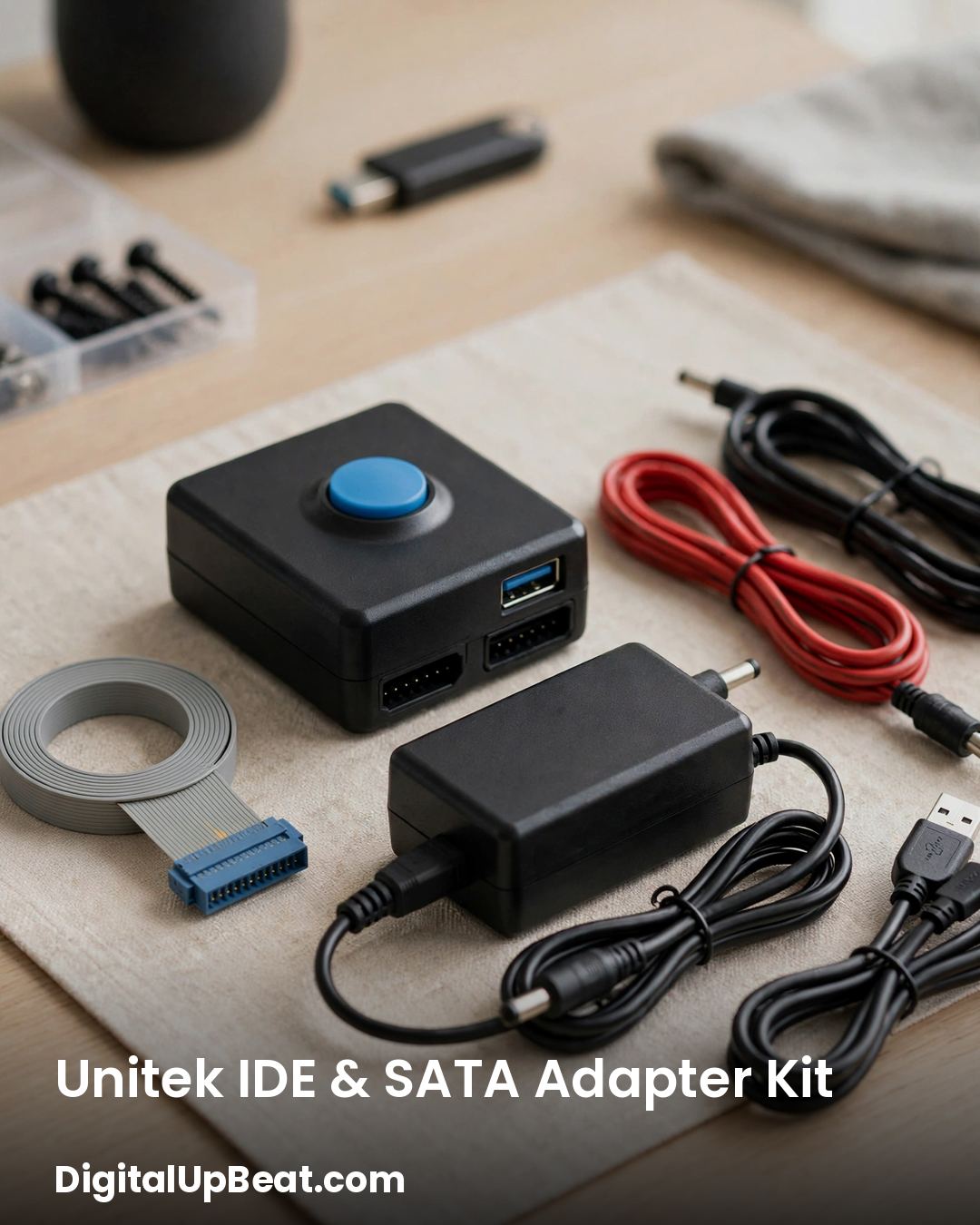
The Unitek USB 3.0 to IDE and SATA Converter is a versatile hard drive reader kit with ports for 2.5-inch and 3.5-inch IDE and SATA hard drives and SSDs, plus a one-touch backup button for quickly copying files from an old drive. It transfers at up to 5 Gbps over USB 3.0 and includes a 12V/2A power adapter, an on/off switch, and an LED status light.
For anyone searching for the best SATA to USB adapter for SSDs and hard drives, the Unitek is a strong all-rounder: it handles both IDE and SATA, works with 2.5-inch and 3.5-inch drives, and the one-touch backup button makes it handy for cloning or saving files from an old drive.
Check Price At Amazon
#3. StarTech USB 3.1 to 2.5″ – Best SATA Hard Drive Adapter
View on Amazon
Specifications
[amazon box=”B00XLAZODE” template=”horizontal” ]
Review
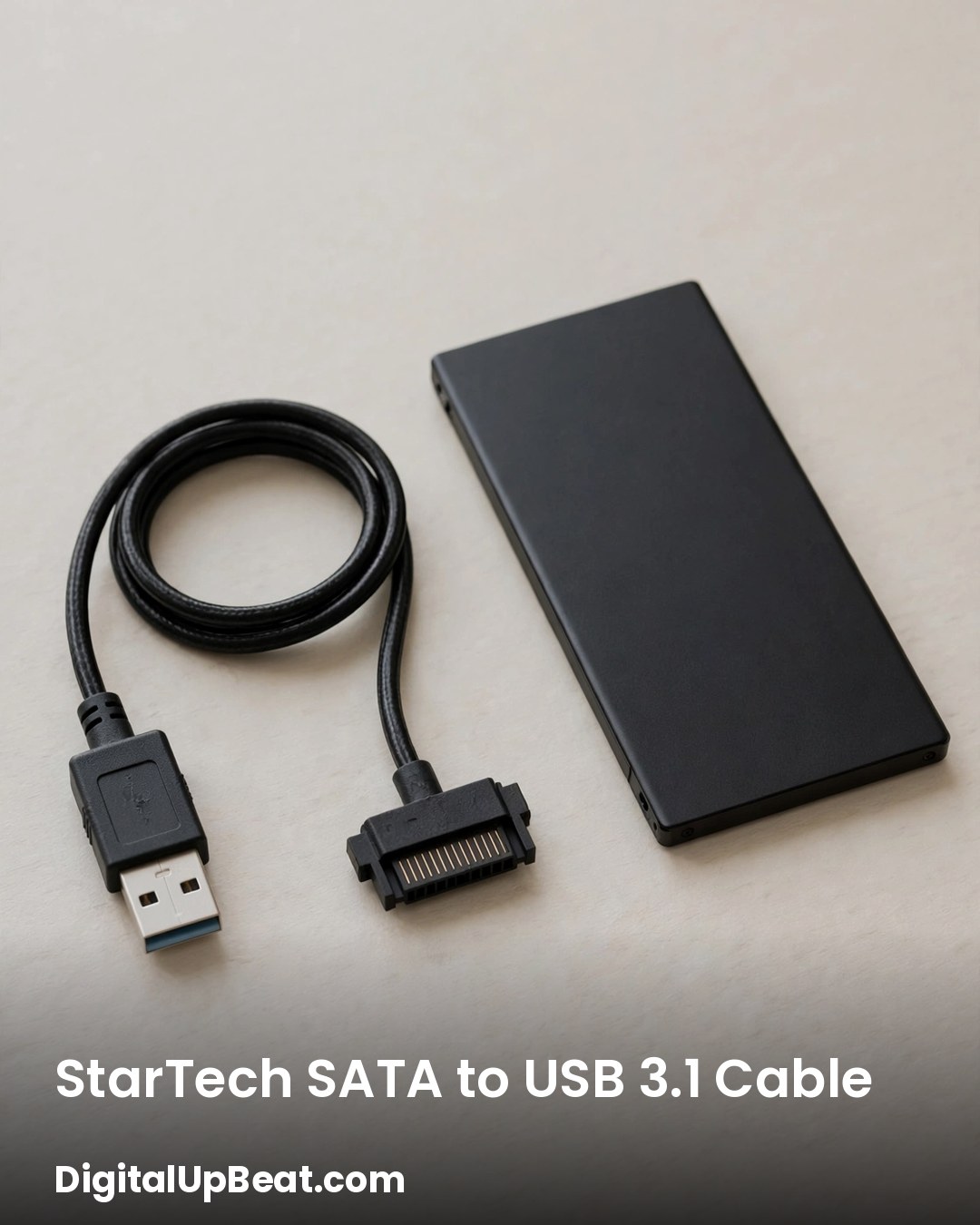
The StarTech.com USB 3.1 to 2.5-inch SATA adapter (USB3S2SAT3CB) is a compact cable that gives you fast access to a 2.5-inch SATA HDD or SSD with no dock, enclosure, or power brick. It supports SATA I, II, and III at up to 10 Gbps with UASP, and StarTech backs it with a 2-year warranty and free lifetime technical support.
This is the pick for a simple laptop hard drive reader: if you only need to read a 2.5-inch SATA drive from an old laptop, a compact SATA to USB cable like this is usually all you need, and it takes up almost no space in a bag. Remember that it is designed for 2.5-inch SATA drives only, so choose a powered adapter or dock for 3.5-inch drives.
Check Price At Amazon
#4. Sabrent USB 3.0 – Best Hard Drive Docking Station
View on Amazon
Specifications
[amazon box=”B00LS5NFQ2” template=”horizontal” ]
Review
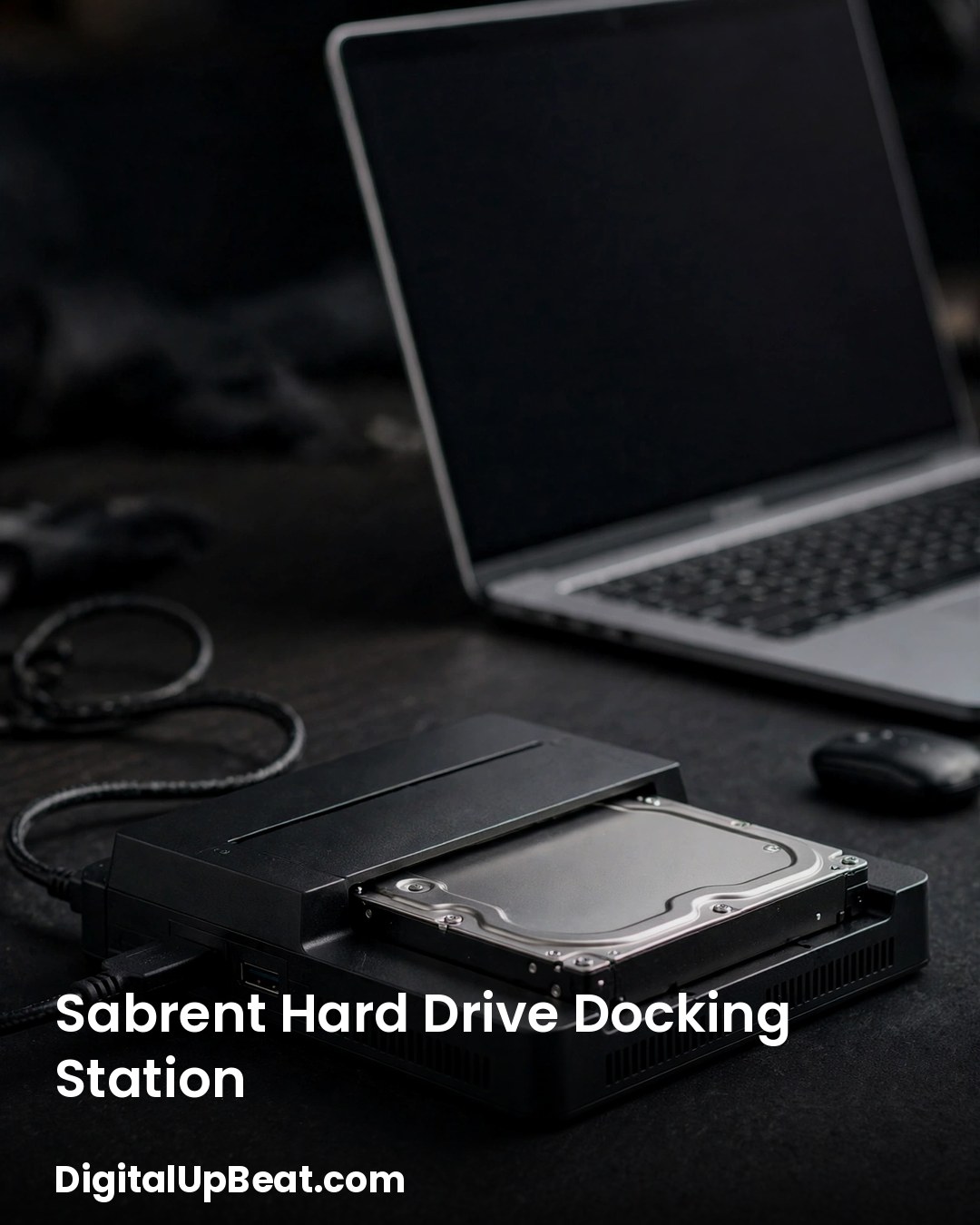
The Sabrent USB 3.0 to SATA lay-flat docking station (EC-DFLT) turns a bare 2.5-inch or 3.5-inch SATA drive into an external drive in seconds — just slide the drive in, with no tools or cables to fiddle with. It connects over USB 3.0 with UASP support and SATA III speeds up to 6 Gbps, and it includes a free download of Acronis True Image for Sabrent for easy drive cloning.
A hard drive docking station is the best choice if you regularly swap drives, because you can drop a bare drive straight into the dock without tools, which suits backups, cloning, and bulk data transfers between several drives.
Check Price At Amazon
#5. WEme USB 3.0 to SATA Converter Adapter
View on Amazon
Specifications
[amazon box=”B00MVRS38G” template=”horizontal” ]
Review
The WEme USB 3.0 to SATA Converter Adapter is a flexible, driver-free laptop hard drive reader that works with 2.5-inch and 3.5-inch SATA I, II, and III SSDs and HDDs, with transfer speeds up to 5 Gbps. It supports drives from 1 TB to 16 TB and also works with SATA optical drives, so it covers both data recovery from old drives and adding extra storage.
The WEme adapter is a practical SATA to USB 3.0 converter for people who want a straightforward, driver-free way to read both 2.5-inch laptop drives and 3.5-inch desktop drives, with support for large-capacity drives for backup and data recovery.
Check Price At Amazon
#6. UGREEN SATA to USB 3.0 Adapter Cable
View on Amazon
Specifications
[amazon box=”B00MYU0EAU” template=”horizontal” ]
Review
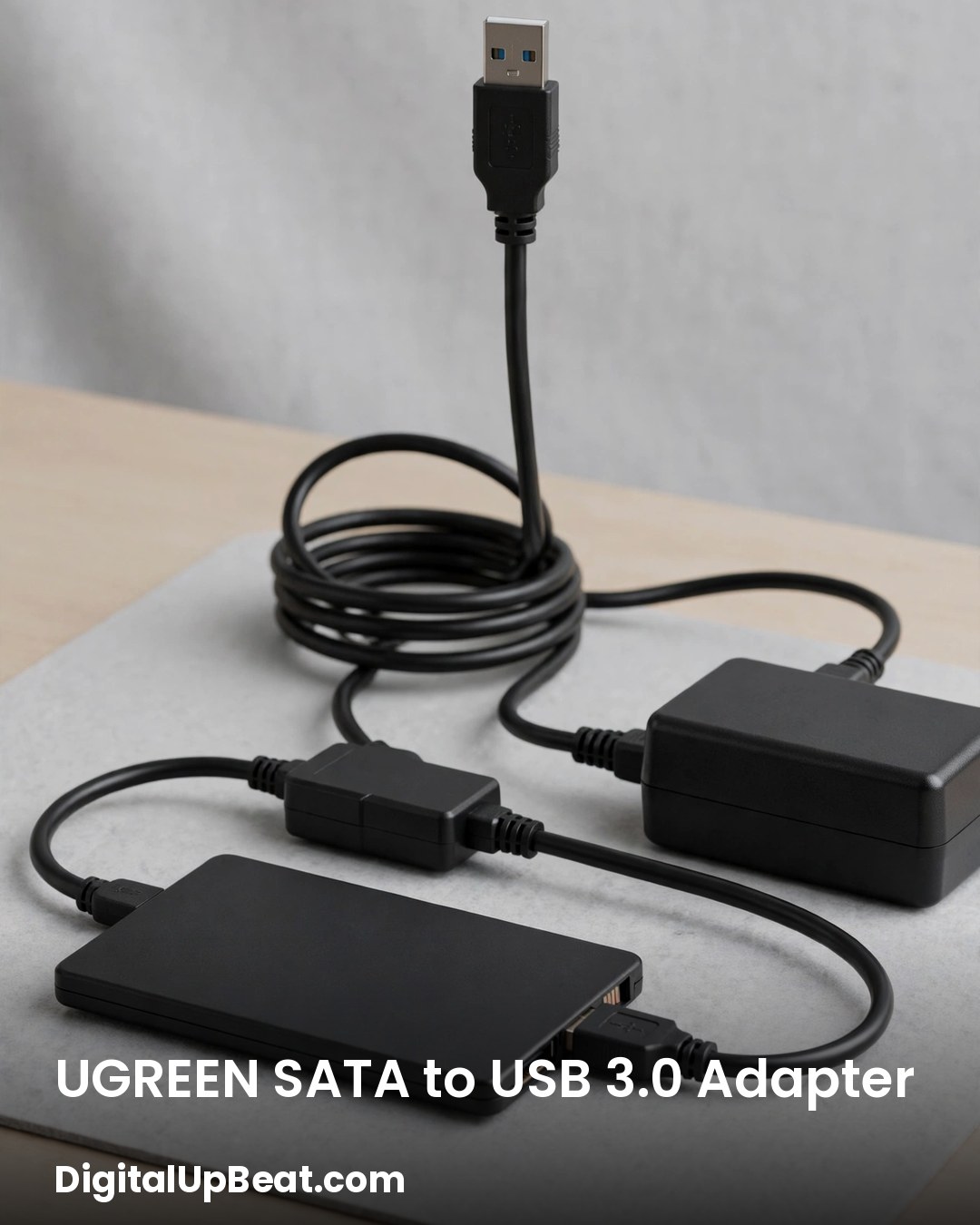
The UGREEN SATA to USB 3.0 Adapter Cable is a popular choice for data recovery from old drives. It reads 2.5-inch and 3.5-inch SATA SSDs and HDDs at up to 5 Gbps with UASP support, and the included 12V/2A power adapter provides the power that 3.5-inch desktop drives need. It works with drives up to 12 TB and needs no drivers on Windows, Mac, or Linux.
If you are looking for a cheap and reliable SATA to USB cable for data recovery, the UGREEN adapter is a good pick: it covers both 2.5-inch and 3.5-inch drives, includes the 12V power adapter needed for desktop drives, and is simple enough for first-time users to set up in minutes.
Check Price At Amazon
How to Choose a Hard Drive Reader (Buying Guide)
Before you buy a hard drive reader, match the reader to your drive. The three things that matter most are the drive’s connector (SATA, IDE, or M.2 NVMe), its size (2.5-inch or 3.5-inch), and whether it needs external power. Get those three right and almost any reader in this guide will work.
SATA vs IDE vs M.2 NVMe: Which Hard Drive Reader Do You Need?
Before you buy a hard drive reader, identify your drive’s connector. Most laptop and desktop drives made in the last 15 years or so use SATA, so a SATA to USB adapter is the right choice for them. Older drives may use IDE (also called PATA), which needs a SATA/IDE to USB adapter with the correct pin connector. Modern M.2 NVMe SSDs are different again: they need an adapter or enclosure made for NVMe, and a standard SATA to USB cable will not read them. Checking the connector first is the quickest way to avoid buying a reader that doesn’t fit.
USB-A vs USB-C Hard Drive Readers
Many newer laptops only have USB-C ports, while older computers use USB-A. If you work with both, look for a hard drive reader with USB-C and USB-A support, or use a simple USB-C to USB-A adapter. Either way, choose a USB 3.0 or faster connection with UASP support where possible, since it improves transfer speed and lowers processor load when your computer supports it.
Bus-Powered vs Externally Powered Hard Drive Readers
Small 2.5-inch laptop drives can often run from USB power alone, which is why a compact adapter cable works well for them. Larger 3.5-inch desktop drives normally need extra power, so choose a reader that includes a 12V power adapter — without it, the drive may not spin up at all. If you plan to read both sizes, a powered adapter or a docking station is the safer pick.
Speed, Size, and Price
Look for USB 3.0 (5 Gbps) as the minimum, and USB 3.1 (10 Gbps) with UASP if you move large files often — but remember the drive itself is usually the bottleneck, not the cable. Make sure the reader fits your drive size: 2.5-inch and 3.5-inch are the common sizes, and most powered readers handle both. As for price, a simple SATA to USB cable costs the least and is enough for a single laptop drive, while a powered converter or docking station costs more but reads every drive you are likely to own. The picks in this guide support drives of 10 TB or more, so capacity is rarely a problem.
How to Read an Old Laptop Hard Drive on Another Computer
If your laptop has stopped working but the drive inside is still healthy, you can usually recover your files with a hard drive reader in a few steps. This works for reading a hard drive from almost any laptop, as long as the drive itself is not damaged.
- Remove the drive: Power the laptop off, unplug it, and take out the internal 2.5-inch drive, following your laptop’s service guide.
- Connect it: Plug the drive into the SATA end of your adapter, dock, or enclosure, then connect the USB end to a working computer. Add the power adapter first if your drive needs one.
- Open the drive: The drive should appear as an external drive in your file explorer, with no drivers needed in most cases. If it is not initialised or does not appear, check it in Disk Management on Windows or Disk Utility on Mac.
- Copy your files: Copy your important data to another drive or cloud storage before doing anything else.
A few cautions: if the drive makes clicking or grinding noises, stop and consider a professional data recovery service rather than repeatedly trying to read it — a failing drive can be damaged further by repeated attempts. If the drive was encrypted, you will need your recovery key to access the data. Macs can usually read Windows-formatted NTFS drives but may not write to them without extra software, so copy files off rather than onto the drive.
Frequently Asked Questions – Hard Drive Reader Guide
What is the purpose of a hard drive reader?
A hard drive reader lets you access the data on a bare internal hard drive and transfer files between that drive and your computer, in both directions. It is the simplest way to recover files from an old laptop or desktop, reuse an old drive for extra storage, or back up data from a drive that no longer has a working computer around it. To use one, connect the drive to the reader’s SATA or IDE port, connect the USB end to your computer, and plug in the power adapter if your drive needs one.
What is the best hard drive reader?
For most people, the Sabrent USB 3.0 to SSD/SATA/IDE converter is the best hard drive reader because it reads both SATA and IDE drives in 2.5-inch and 3.5-inch sizes and includes the power supply that desktop drives need. If you only need to read a laptop drive, the compact StarTech SATA to USB cable is the cheaper and simpler pick, and the Sabrent lay-flat docking station is best if you swap drives often.
What is the best laptop hard drive reader?
For most people, the best laptop hard drive reader is a compact SATA to USB 3.0 adapter cable, because it reads a 2.5-inch laptop HDD or SSD without any tools or drivers and fits in a laptop bag. If you also need to read 3.5-inch desktop drives or older IDE drives, choose a powered SATA/IDE to USB converter or a docking station instead.
Can I read a laptop hard drive on another computer?
Yes. Remove the drive from the laptop, connect it to a hard drive reader or SATA to USB adapter, and plug the USB end into another computer. The drive will normally show up as an external drive, and you can copy your files across. If the drive is encrypted, you will need your recovery key.
What is the difference between a hard drive reader, an adapter, and a docking station?
They all connect a bare internal drive to a computer over USB. An adapter cable is the smallest and cheapest option, an enclosure protects the drive for regular use, and a docking station lets you drop drives in and swap them quickly, which is ideal for backups and working with several drives.
Do I need drivers to use a SATA to USB hard drive reader?
Usually no. Most modern SATA to USB adapters are plug and play on Windows, Mac, and Linux. If the drive does not appear, check it in Disk Management or Disk Utility, since it may need to be initialised or assigned a drive letter.
Can a SATA to USB adapter read an M.2 NVMe SSD?
No. A standard SATA to USB adapter works with SATA drives only. M.2 NVMe SSDs need an adapter or enclosure designed for NVMe, so check your drive’s connector and type before you buy.
Why does my 3.5-inch hard drive need external power?
Desktop 3.5-inch drives need more power than a USB port can usually provide, so they require the 12V power adapter that comes with most powered hard drive readers. Small 2.5-inch laptop drives can often run from USB power alone.
What should I check before buying a hard drive reader?
First, check your drive’s connector (SATA, IDE, or M.2 NVMe) and size (2.5-inch or 3.5-inch), then check whether it needs external power. After that, decide on a budget and pick a reader type: a cable for one laptop drive, a powered converter for mixed old drives, or a docking station for frequent swapping. Reading the reviews above will help you match the reader to your drive.
Can I connect a hard drive reader to my phone?
You can connect a hard drive reader to a phone that supports USB OTG, using an OTG adapter between the phone and the reader’s USB plug. Once connected, you can browse the drive’s files in your phone’s file manager. Keep in mind that 3.5-inch drives still need their 12V power adapter, and your phone may not be able to power the reader on its own.
Conclusion – Hard Drive Reader Guide
A hard drive reader is the simplest way to read an old hard drive — and the right one depends on your drive, not on the brand. For most people, a compact SATA to USB adapter cable is enough for a laptop drive, while a powered SATA/IDE converter or a docking station is the better pick if you also need to read 3.5-inch desktop drives or old IDE drives. Check your drive’s connector and size first, then pick from the six readers above.
If you are deciding between drive types for a new build, our guide to SSD vs HDD: which is best for you explains the trade-offs. And if the laptop the drive came from is still usable as a second machine, a laptop docking station can turn it into a proper desktop setup.

A passionate tech enthusiast with a deep focus on PC hardware, gaming rigs, and performance tuning, Bertine Gaynor has spent years exploring the latest innovations in processors, GPUs, and custom builds. On DigitalUpbeat.com, he shares hands-on reviews, performance breakdowns, and expert insights to help readers make smart hardware choices. When not testing components, he’s often optimizing setups for peak efficiency or diving into the latest tech trends shaping the future of computing.