
Book Appointment Now


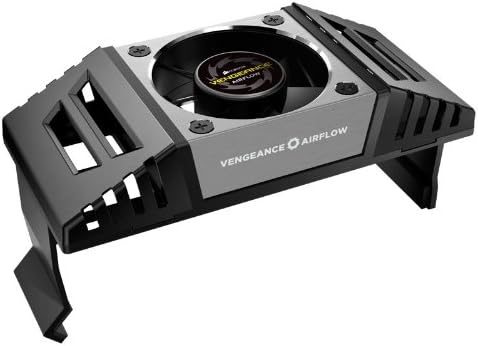
Corsair Vengeance Airflow Memory Cooling Fan CMYAF
Corsair Vengeance Airflow Memory Cooling Fan Review



Key Features & Performance
[amazon box=”B00GU9UG9A” template=”horizontal” ]
The Corsair Vengeance Airflow (CMYAF) isn’t just about utility; it’s about customization. It typically includes interchangeable color covers (red, blue, and silver) to match your build’s aesthetic. The unit clips firmly onto most DIMM sockets, hovering a powerful but quiet fan directly over your memory modules.
| Technical Specifications | |
|---|---|
| Bearing Type | Ball Bearing |
| Fan Diameter | 60mm |
| RPM Speed | 3500 RPM (Standard) / 2500 RPM (with included speed control cable) |
| Noise Level | 21.0 dB(A) Min / 25 dB(A) Max |
| Fan Lifespan | 80,000 Hours at 25°C |
| Voltage | 7 – 13.2V |
Pros
- Excellent active cooling for overclocking.
- Long lifespan ball-bearing fan.
- Interchangeable color accents included.
- Quiet operation (especially with speed adapter).
Cons
- May interfere with large air CPU coolers.
- Mounting clips can be tight on some motherboards.
Guarantee: 2 Years | Current Price: [price_with_discount] (as of [price_update_date])


A passionate tech enthusiast with a deep focus on PC hardware, gaming rigs, and performance tuning, Bertine Gaynor has spent years exploring the latest innovations in processors, GPUs, and custom builds. On DigitalUpbeat.com, he shares hands-on reviews, performance breakdowns, and expert insights to help readers make smart hardware choices. When not testing components, he’s often optimizing setups for peak efficiency or diving into the latest tech trends shaping the future of computing.


