
Book Appointment Now

Best Power Supply For i9 9900k
Best Power Supply For i9 9900k
To determine the appropriate amperage, consider the video card’s power requirements. Typically, manufacturers specify a minimum PSU wattage and sometimes a minimum amperage for the 12-volt rail. To build in a safety margin and ensure future-proofing, you should ensure that the 12-volt rail of your power supply offers at least 50 percent greater amperage than the minimum required by your video card. For example, if your video card requires a minimum of 20 amps on the 12-volt rail, you should choose a PSU with at least 30 amps on the 12-volt rail. This approach provides headroom for overclocking, future upgrades, and unexpected power spikes.
This method allows you to obtain a high-quality ATX power supply that can be used with a 9700K or a 9900K processor, as these CPUs also draw considerable power, particularly when under heavy load. Selecting a PSU based on these guidelines will ensure a stable and reliable system.
For those who are still not convinced about the importance of these considerations, we encourage you to continue reading to make the best decision possible. Before you begin reading, we recommend that you have a look at our helpful comparison chart, which will enlighten you about the fundamental features of each of the products we are comparing. This chart will visually represent key specifications such as wattage, efficiency rating, 12-volt rail amperage, and available connectors, allowing for a clear and informed comparison.
We have also covered best RAM for i9 9900k and best Motherboard for i9 9900k.
Top 3 Picks: Best Power Supply For i9 9900k
| Category | Product | Efficiency | Wattage | Link |
|---|---|---|---|---|
| BEST OVERALL | EVGA SuperNOVA 750 G3 Balanced power for 9900K |
80+ Gold | 750W | View |
| PERFORMANCE | Corsair RM1000i For heavy overclocking |
80+ Gold | 1000W | View |
| BUDGET | EVGA 600 BQ Semi-modular entry choice |
80+ Bronze | 600W | View |
Best Power Supply For i9 9900k – Review
#1. EVGA SuperNOVA G3 550W 80+ Gold
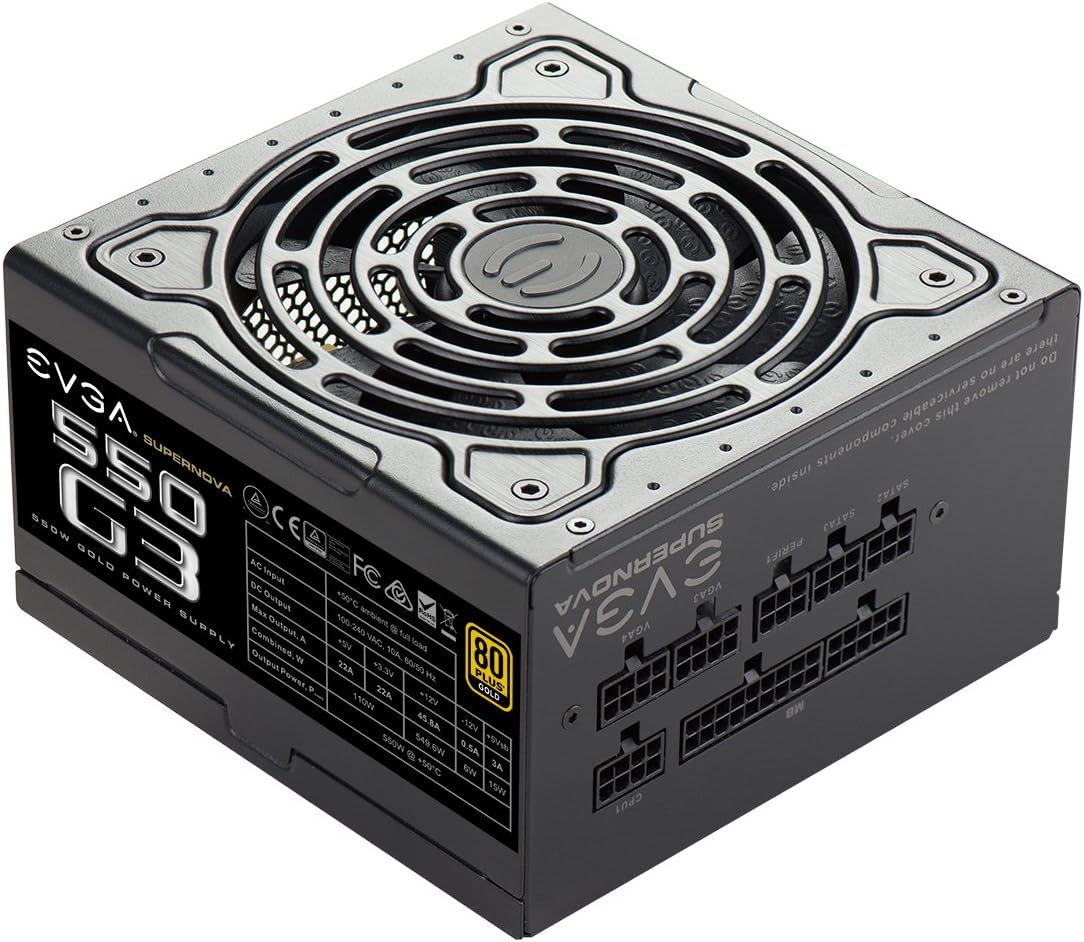
Without a doubt, the EVGA SuperNOVA range of power supply is the most popular, and the G3 550W is the best option for a 9700K build. It works well with a 9700K processor, GTX1080 graphics card, SSD, and HDD. The G3 has an efficiency rating of 87 percent or higher, thanks to an 80+ gold certification that allows it to handle full load.
EVGA provides excellent customer service. Finally, with 46 amps on the 12v rail, it well exceeds the GTX 1080’s requirements. This power supply reaches a sweet spot in terms of price and performance, making it a smart investment.
Pros
- 80 plus Gold certified for efficiency.
- 130-millimeter Hydraulic Dynamic Bearing fan.
- Compact size (150mm length).
- Fully Modular design.
Cons
- 550W provides little headroom for extreme 9900k overclocking.
Top Features
[amazon box=”B01LWTS2UL” template=”horizontal” ]
#2. EVGA 600 BQ 80+ Bronze
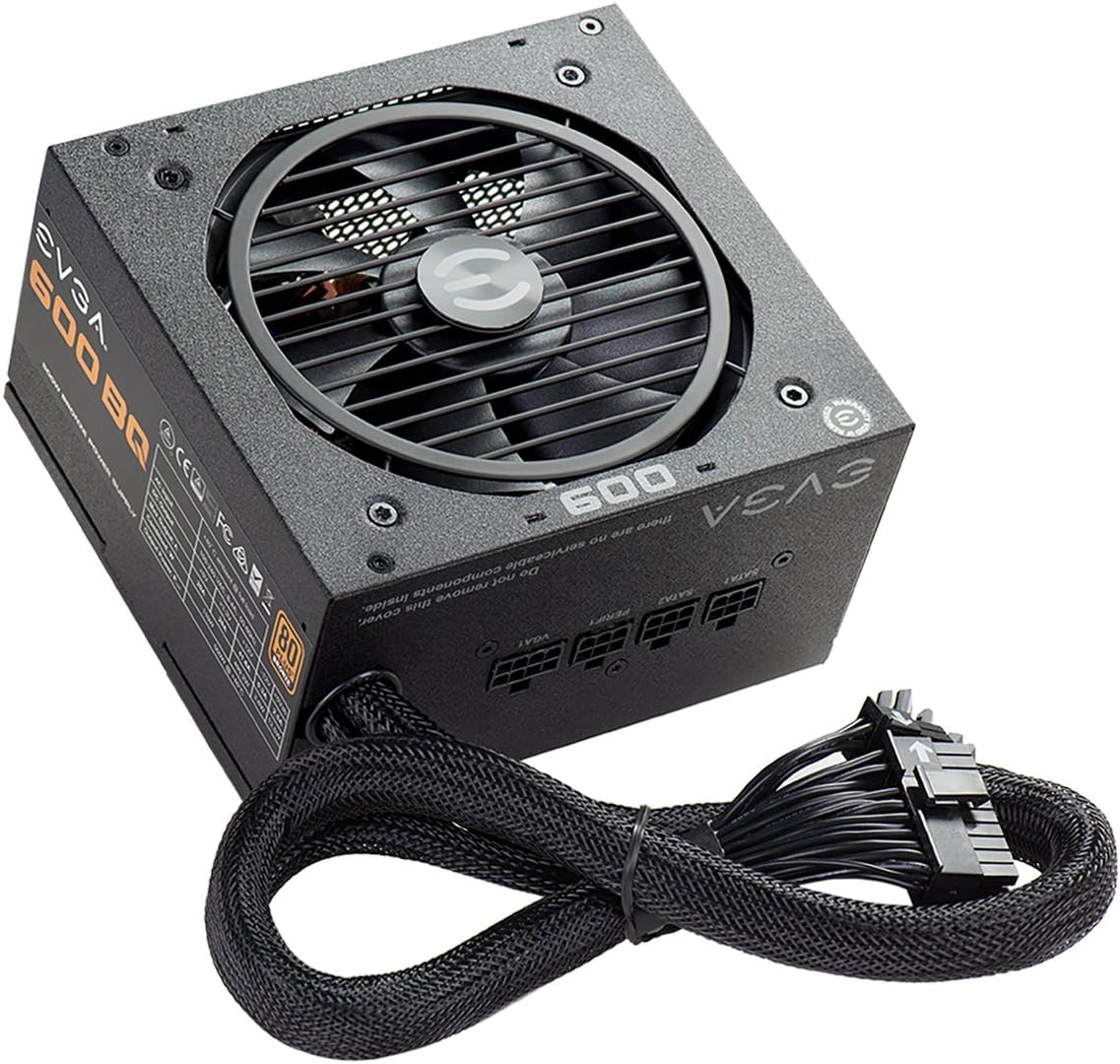
The EVGA 600 BQ is the best power supply if you simply want to overclock the CPU and not the GPU. An overclocked 9900k, an RTX2070, a closed-loop CPU cooler, two SSDs, and two HDDs are included in this setup. This one is likewise a cheap pick, with a low price tag with a lot of good features and few drawbacks.
Moving on, the EVGA 600 BQ is semi-modular, which means that just the major power lines are hooked into the power supply, and the rest of the peripheral cables are modular. The EVGA 600 BQ has an 80+ bronze grade, which means it has 82 percent efficiency.
Pros
- Great value for money.
- Semi-modular design helps cable management.
- Ultra-low noise operation.
- Heavy-duty protections (OVP, UVP, OCP, OPP, SCP, OTP).
Cons
- 80+ Bronze efficiency is lower than Gold competitors.
- Sleeve bearing fan has shorter lifespan than FDB.
Top Features
[amazon box=”B06XD3LXXK” template=”horizontal” ]
#3. Corsair RM1000i 80+ Gold
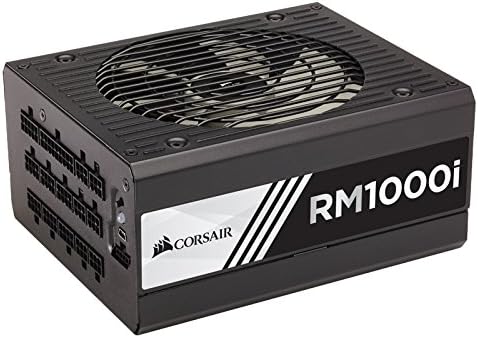
Do you want to overclock something for gaming? The Corsair RM1000i is the best option for you if you have a system with a 9700k, a GTX 1080 Ti, a closed-loop CPU cooler, two SSDs, and two HDDs. You can overclock both the GPU and the CPU with 83 amps on the 12v rail and 1000 watts.
This power supply is totally modular and has an 80+ gold certification, making it extremely reliable and simple to assemble. It’s a wonderful deal for a high-wattage power supply, and it’s a great pick for overclocking. The power supply is responsible for converting energy from your home’s alternating current (AC) line to the direct current (DC) required by the PC.
Pros
- Massive 1000W output for extreme overclocking.
- Corsair Link Digital for monitoring performance.
- Zero RPM Fan Mode for silent operation at low loads.
- Fully Modular cables.
Cons
- Large physical size might not fit all cases.
- High price point.
Top Features
[amazon box=”B00YPNSQRW” template=”horizontal” ]
#4. Corsair RM Series Power Supply
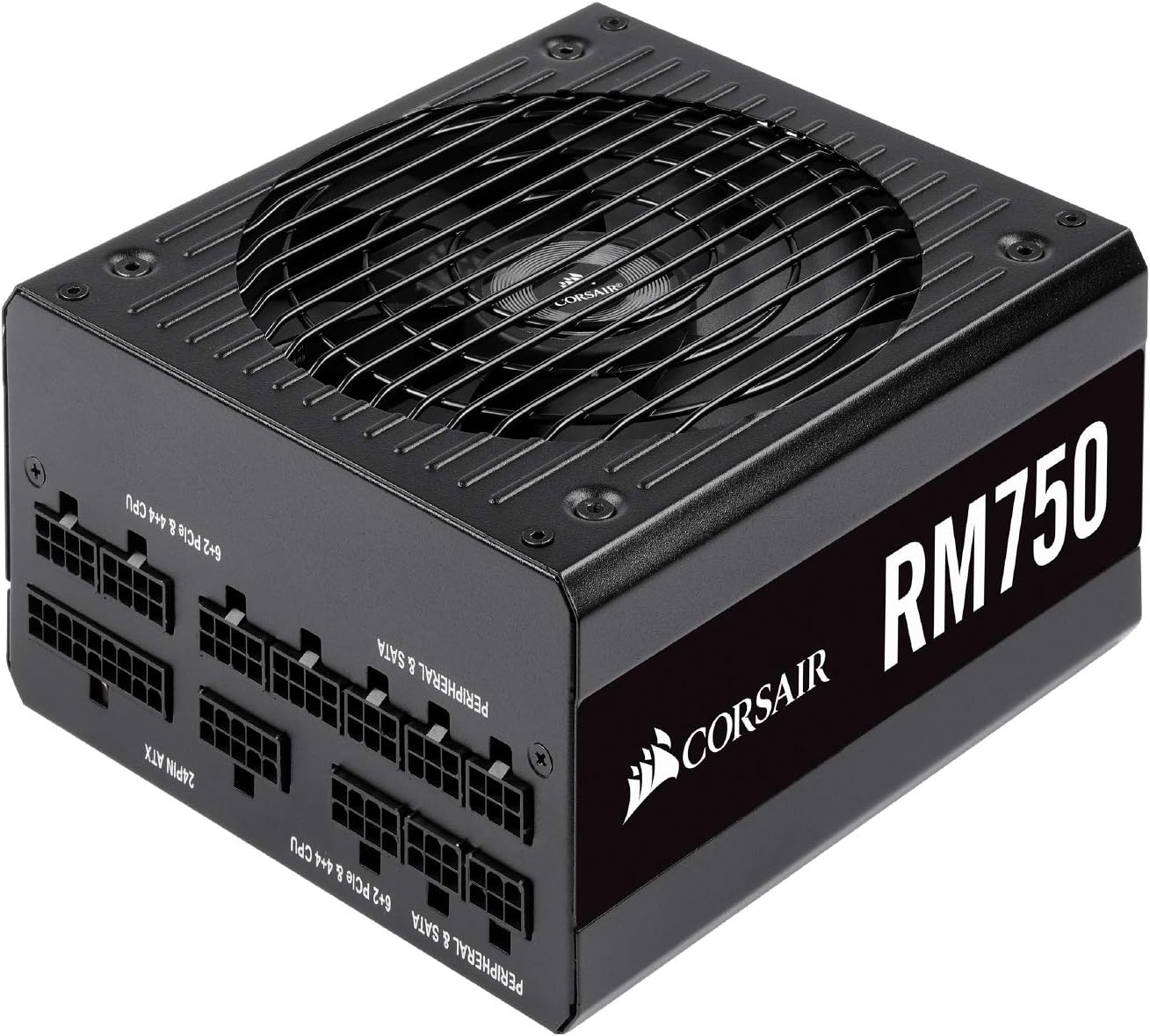
The Corsair RM Series Power Supply has achieved 80+ Gold certification and operates at an extraordinarily high efficiency, particularly when it comes to decreased power consumption, which results in significantly cooler temperatures and significantly less noise. This power supply device is ideal for users who want the lowest possible noise operation performance.
It works exceptionally well with a 140mm rifle bearing fan and has a specific curve that ensures that noise is maintained to a bare minimum even when the unit is operating at maximum capacity. This gadget is equipped with industrial-grade capacitors with a temperature rating of 105°C, which ensures reliable electrical performance and dependability.
Pros
- Microsoft Modern Standby compatible (fast wake-from-sleep).
- Tuned for low noise operation.
- Industrial-grade 105°C capacitors.
- Compact casing.
Cons
- Cables can be stiff in some batches.
Top Features
[amazon box=”B07DTP6SLJ” template=”horizontal” ]
#5. EVGA SuperNOVA 750 G3
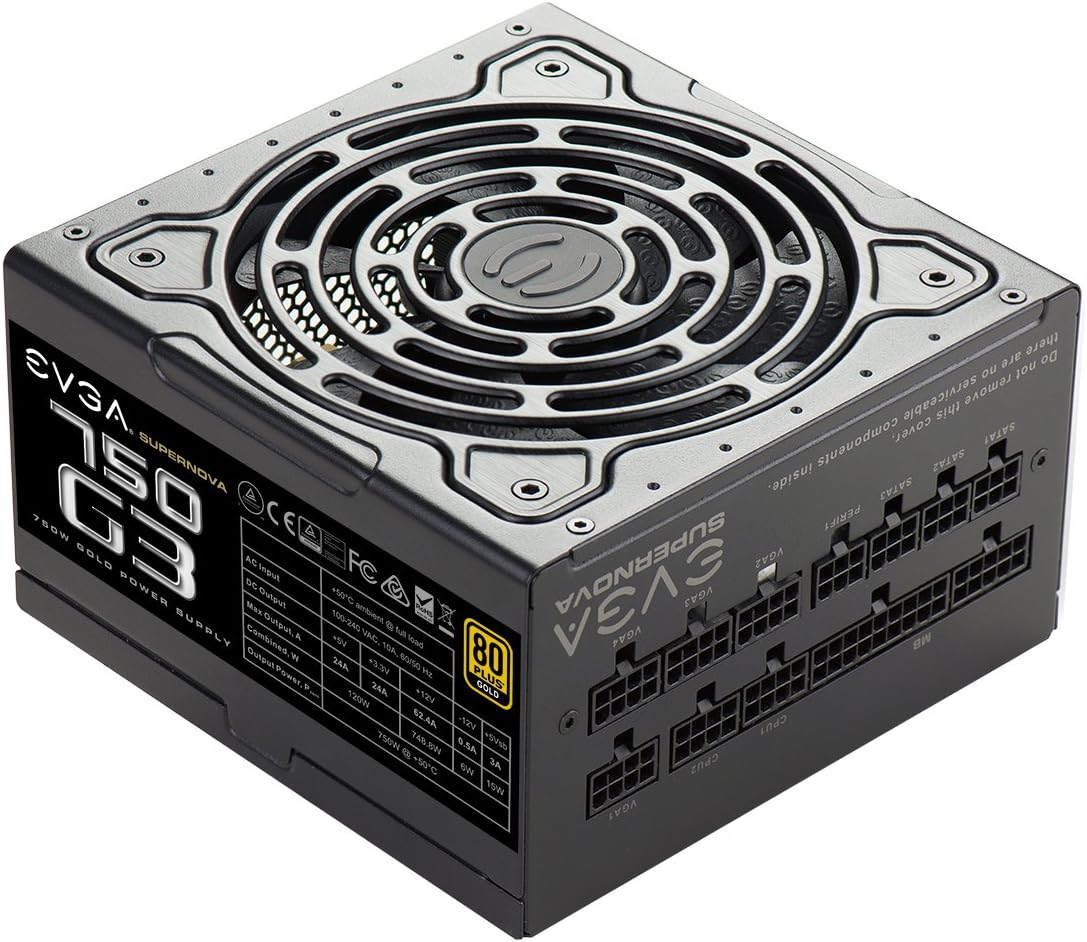
The EVGA SuperNOVA 750 G3 is a component of EVGA’s award-winning G-Series of power supplies, which have received numerous accolades. This is made simpler to accept by the fact that it comes with a 10-year warranty for consumers and is equipped with a Japanese-designed capacitor.
Moreover, this device has been totally certified by the 80 Plus Gold certification and has an efficiency of 90 percent (115VAC) and 92 percent (220VAC to 240VAC) or higher. 750W is generally considered the sweet spot for a single-GPU 9900K system.
Pros
- 10 Year Warranty offers peace of mind.
- High quality Japanese capacitor design.
- 80 Plus Gold certified.
- Ideally sized for 9900K and RTX cards.
Cons
- Fan profile can be aggressive under load.
Top Features
[amazon box=”B005BE058W” template=”horizontal” ]
#6. EVGA 450 BR Power Supply
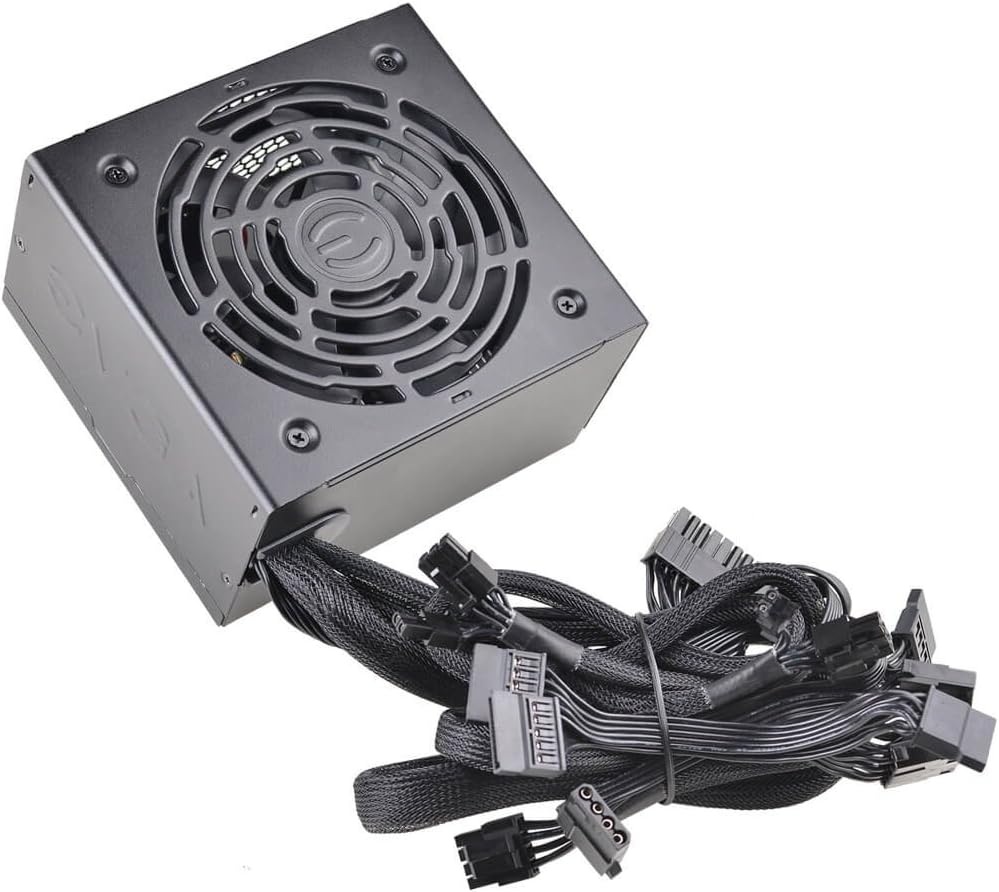
An exceptionally efficient and extremely dependable power supply, the EVGA 450 BR Power Supply provides 450W of continuous power. It has been certified by the 80 plus Bronze Certification, which ensures that it will operate at an efficiency of 85 percent or more under the majority of load conditions. Also included is the guarantee of significantly improved protection, which includes the likes of OTP, OVP, OPP, UVP, OCP, and of course SCP among others.
Pros
- Very affordable price.
- Heavy-duty protections included.
- Great customer service.
Cons
- 450W is not recommended for a high-end 9900K gaming rig.
- Non-modular cabling.
Top Features
[amazon box=”B07DTP6SLJ” template=”horizontal” ]
#7. Seasonic FOCUS Plus 650
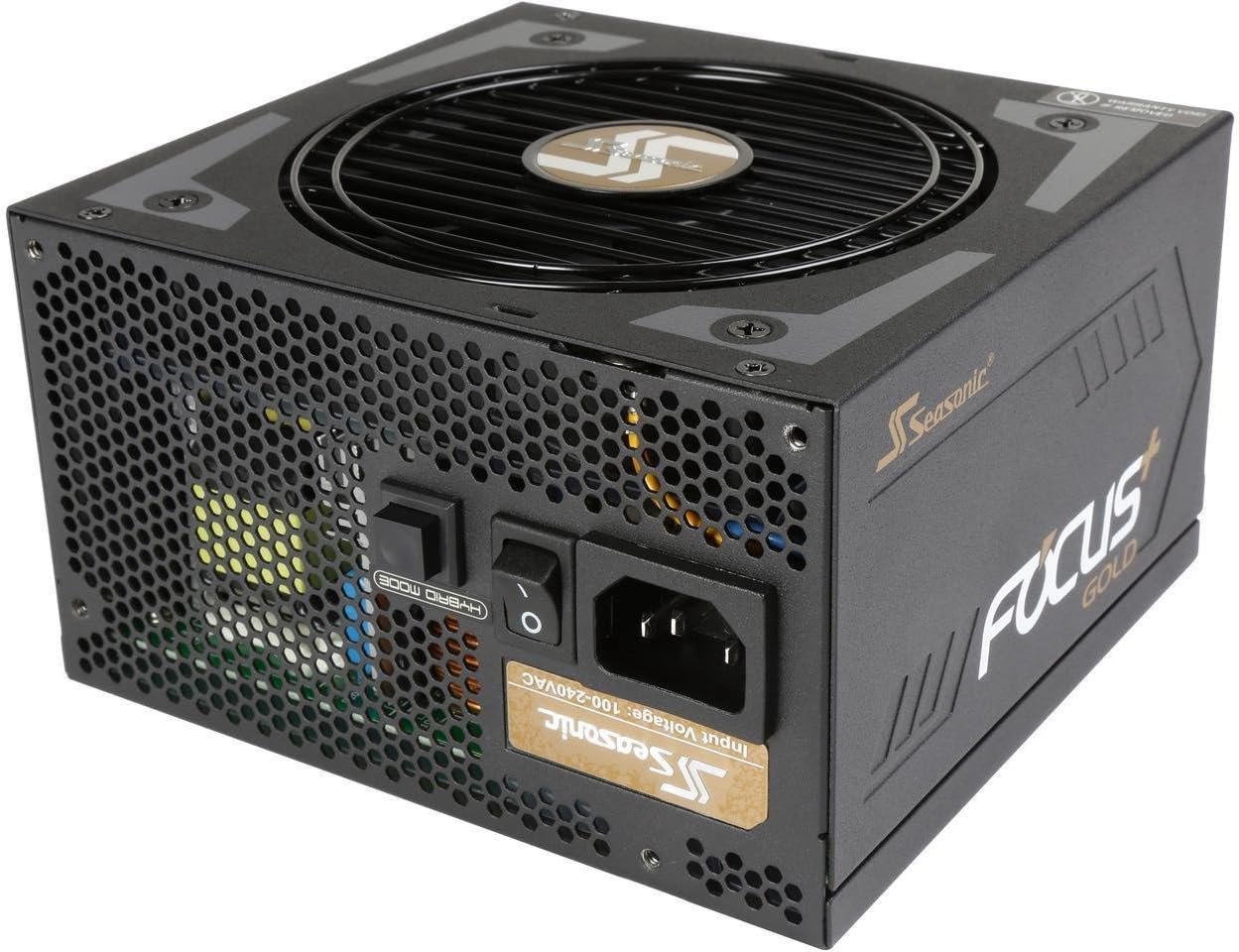
The Seasonic FOCUS Plus 650 is the next gadget on our list, and it comes with an astounding 10-year warranty that means customers can rest easy knowing their equipment is protected. It is rather small in comparison to most others, measuring only 140 mm deep, and it also has a higher power output to size ratio than most others.
A certification from 80 Plus Gold is included with this device, which allows it to ensure that it operates at 87 percent efficiency at 20 percent load and at 87 percent efficiency at 100 percent load.
Pros
- Extremely Compact (140mm deep).
- Reliable 80 Plus Gold efficiency.
- Excellent voltage regulation.
- 10-year warranty.
Cons
- Cables contain inline capacitors which can be bulky.
Top Features
[amazon box=”B073H33X7R” template=”horizontal” ]
#8. EVGA SuperNOVA 650 P2
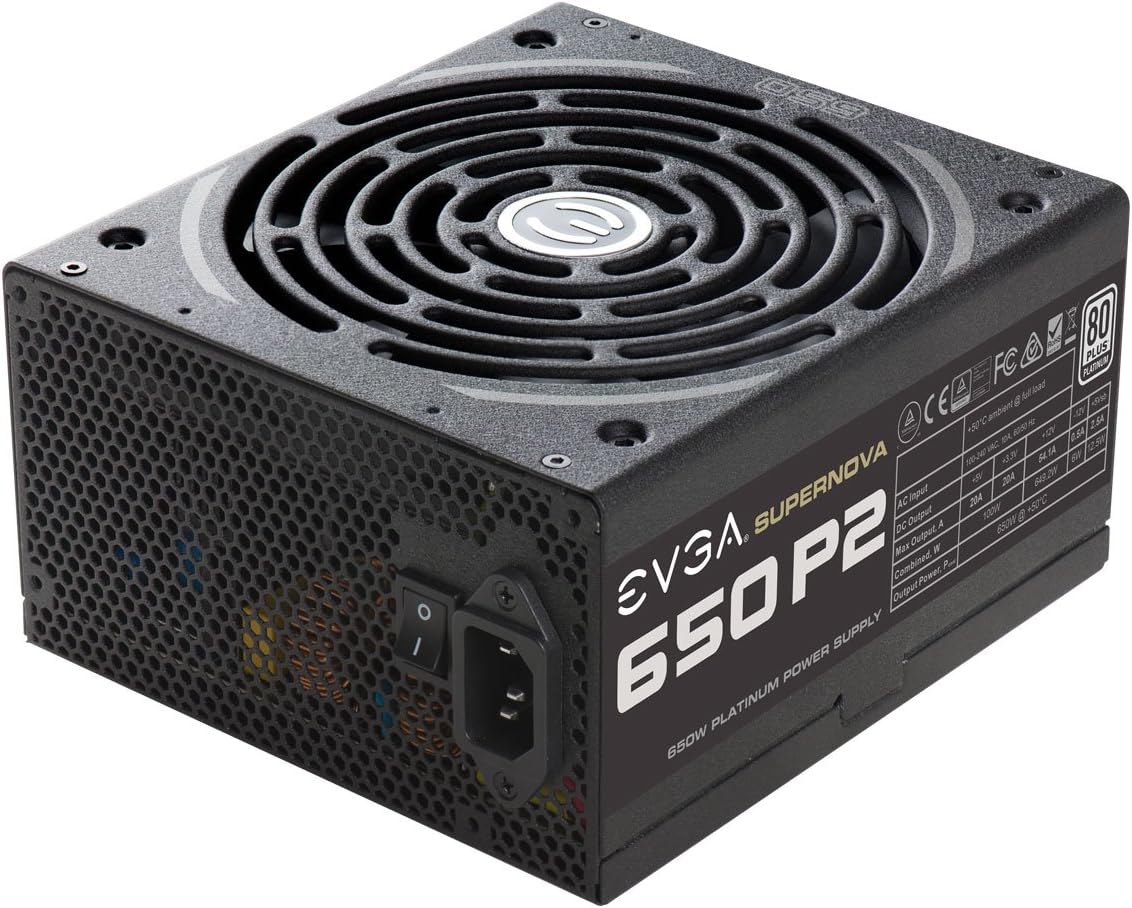
Our next product which is the EVGA SuperNOVA 650 P2 is available to users in 650 watts. This unit has an 80 Plus Platinum certification. It offers spotless and high-quality performance capacity for each part. The ECO Control Fan framework offers fan modes to give completely zero fan noise during low load to medium load tasks. It is backed by a 10-year warranty and also has a 100% Japanese capacitor design.
Pros
- 80 Plus Platinum rated (Highest efficiency on this list).
- ECO Control Fan system for silence.
- 100% Japanese capacitor design.
- Exceptional voltage stability.
Cons
- Price premium for Platinum efficiency.
Top Features
[amazon box=”B010HWDPKW” template=”horizontal” ]
Frequently Asked Questions (FAQ)
How many watts does an i9 9900k Use?
Intel uses a feature called Thermal Design Power (TDP) to depict how much power their CPUs produce, and it was determined that the i9 9900K is rated at 95 watts using this method. Even though this is accurate, the measure of wattage it employs varies greatly, ranging from less than 10 watts while inactive to more than 130 watts when operating at full throttle.
Is air cooling enough for i9 9900k?
Most CPUs nowadays can efficiently run Core i9 9900K at stock speeds with well-balanced temperatures, even when they are fully loaded. You can also overclock the Core i9 9900K to 4.9 GHz or 5 GHz on each of the 8 cores, and because air cooling is employed, it is sufficient to keep the temperature below 80°C or 85°C.
What power supply do I need for i9 9900k?
With the i9 9900k, we recommend a 650-750W power supply with one graphics card. But for serious overclocking, 750W-800W is sufficient. For optimal performance and efficiency, try to use 75%-80% of the power supply unit’s total capacity.
Summary
A motherboard is undeniably one of the most crucial components of any computer system. The ASRock Z390 Taichi Ultimate, which has been specifically developed for online gaming, is one of the best motherboard options for a processor like the i9 9900k. The fact that it supports 10GB Ethernet adds to this, ensuring that you can stream and game without difficulty.

A passionate tech enthusiast with a deep focus on PC hardware, gaming rigs, and performance tuning, Bertine Gaynor has spent years exploring the latest innovations in processors, GPUs, and custom builds. On DigitalUpbeat.com, he shares hands-on reviews, performance breakdowns, and expert insights to help readers make smart hardware choices. When not testing components, he’s often optimizing setups for peak efficiency or diving into the latest tech trends shaping the future of computing.


