
Book Appointment Now


Intel Iris Xe vs UHD vs AMD Radeon
Integrated Graphics Showdown: Intel Iris Xe vs UHD vs AMD Radeon – Which Is Best for You in 2026?
Walk into any electronics store or browse laptop listings online, and you’ll see a bewildering array of integrated graphics options. Intel Iris Xe, Intel UHD, AMD Radeon 780M, Radeon 890M—the names blur together. But here’s the truth that most spec sheets won’t tell you: not all integrated graphics are created equal. The gap between the weakest and strongest iGPUs in 2026 is wider than ever, and choosing wrong could mean the difference between smooth gaming and a slideshow.
This guide cuts through the marketing noise. Using real benchmark data from UL Solutions, PassMark, and hands-on testing from Digital Foundry and iXBT.games, we’ll break down exactly how Intel Iris Xe stacks up against Intel UHD, AMD’s Vega and Radeon families, and even the new generation of iGPUs that are redefining what integrated graphics can do.
Pro Tip: The integrated graphics landscape changed dramatically in 2025-2026. If your knowledge of iGPUs is stuck in the Intel UHD 620 era, prepare to be surprised. Today’s top-tier integrated graphics can actually compete with dedicated GPUs like the RTX 4050 in many scenarios—something unthinkable just three years ago.
The Quick Take: Who Wins?
Before we dive deep, here’s the executive summary for 2026:
- Intel UHD Graphics: Bare minimum for display output. Fine for office work, terrible for gaming. Avoid unless your budget is absolutely rock-bottom.
- Intel Iris Xe: The baseline for “good enough” integrated graphics. Handles esports titles, light creative work, and 4K video playback. Requires dual-channel RAM to perform.
- AMD Radeon 780M (RDNA 3): The previous gold standard. Runs many AAA games at 1080p low/medium settings without upscaling. Still excellent in 2026.
- AMD Radeon 890M (RDNA 3.5): Performance approaching entry-level dedicated GPUs. Up to 44 FPS in Cyberpunk 2077 at 1080p medium natively.
- Intel Arc B390 (Xe3, Panther Lake): The new king of iGPUs in 2026. Delivers up to 57 FPS in Cyberpunk 2077 at 1080p medium—matching the RTX 4050 laptop GPU.
According to UL Benchmarks’ March 2026 data, the performance hierarchy is clear: Intel UHD and basic Vega sit at the bottom, Iris Xe occupies the mid-range, and AMD’s Radeon 700M series plus Intel’s new Arc B390 battle for the top spot .
Performance Benchmark Comparison (March 2026 Data)
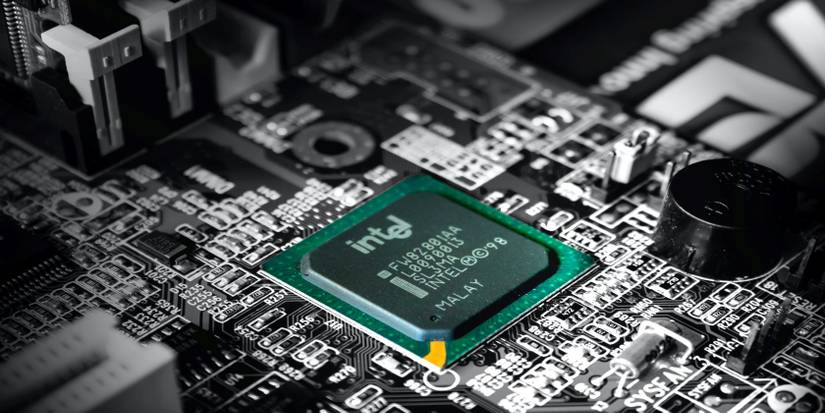
Let’s look at the numbers. All benchmark data below comes from UL Benchmarks (3DMark Steel Nomad) and PassMark, representing thousands of real-world user submissions .
GPU3DMark Steel Nomad ScoreRelative to Iris XeBest ForIntel UHD Graphics (typical)~70-90~50% slowerOffice work, web browsingIntel Iris Xe (96EU)168Baseline (1.0x)Esports, 4K media, light gamingAMD Radeon Vega 8 (Cezanne)2261.35x fasterBudget gaming, older AAA titlesAMD Radeon 680M3612.15x faster1080p gaming, content creationAMD Radeon 780M4782.84x fasterAAA gaming at 1080p low/mediumAMD Radeon 890M5553.30x fasterEntry-level dedicated GPU replacementIntel Arc Graphics (Meteor Lake)6563.90x fasterNext-gen iGPU performanceIntel Arc B390 (Lunar Lake integrated)7804.64x fasterCompetitive with RTX 4050Source: UL Benchmarks, March 2026
These numbers tell a clear story: Iris Xe sits firmly in the middle of the pack. It’s a massive upgrade over older UHD graphics, but it’s significantly outclassed by modern AMD Radeon iGPUs and Intel’s own newer Arc solutions.
Intel UHD Graphics: The Bare Minimum
Intel’s UHD Graphics family (UHD 620, UHD 630, etc.) represents the baseline integrated graphics found in older and budget Intel laptops. These GPUs have been around since the 8th Gen Coffee Lake era and haven’t seen significant architectural improvements.
What it can do:
- 4K video playback (with hardware decoding support)
- Microsoft Office, web browsing, Zoom calls
- Very light games like Stardew Valley, Undertale, or older titles (pre-2010)
What it cannot do:
- Modern AAA gaming—even at 720p lowest settings, expect sub-20 FPS
- Serious video editing or 3D rendering
- Competitive esports titles at acceptable frame rates
Verdict: In 2026, UHD Graphics is only acceptable for users who never game and whose most demanding task is streaming Netflix. If you’re reading this guide, you should aim higher.
Intel Iris Xe: The Capable All-Rounder
Introduced with 11th Gen Tiger Lake processors and refined through 12th, 13th, and 14th Gen chips, Iris Xe represents Intel’s first serious attempt at competitive integrated graphics. Built on the Xe-LP architecture, it features up to 96 execution units (EUs) and supports hardware decoding for modern codecs like AV1, H.265, and VP9 .
Real-world gaming performance (16GB dual-channel RAM required):
- Valorant: 60-90+ FPS at 1080p low/medium
- CS2: 60-80 FPS at 1080p low
- League of Legends: 60+ FPS at 1080p high
- GTA V: 30-40 FPS at 720p medium
- Fortnite: 35-50 FPS at 720p low (Performance Mode)
- Cyberpunk 2077: 20-25 FPS at 720p lowest—not playable
The critical factor: dual-channel RAM. Iris Xe performance depends entirely on memory configuration. In single-channel mode, performance drops by 25-30%. A laptop with 8GB single-channel RAM will feel sluggish; the same laptop with 16GB dual-channel can actually game respectably .
Who should buy Iris Xe: Students, office workers, and casual gamers who want a thin-and-light laptop that can handle esports titles and light creative work. If your gaming ambitions stop at Valorant and League of Legends, Iris Xe is perfectly adequate.
Warning: Not all Iris Xe implementations are equal. The 96 EU version (typically found in i7 processors) performs noticeably better than the 80 EU version (found in i5 processors). Also verify that your laptop has dual-channel RAM—this is non-negotiable for acceptable performance.
AMD Radeon Vega: The Budget Alternative
AMD’s Vega-based integrated graphics (Vega 3, Vega 6, Vega 8, Vega 10) were competitive in their time, appearing in Ryzen 2000, 3000, and some 4000 series mobile processors. In 2026, they represent the budget entry point for light gaming on AMD systems .
The Radeon Vega 8 (Cezanne) scores 226 in 3DMark Steel Nomad—about 35% faster than Iris Xe—making it a solid option for budget-conscious buyers . However, these GPUs lack modern features like hardware ray tracing or advanced upscaling support.
Who should buy Vega: Users on extremely tight budgets (sub-$500 laptops) who still want to play older games or esports titles. In 2026, Vega is being phased out in favor of newer RDNA-based Radeon graphics.
AMD Radeon 700M Series (RDNA 3/3.5): The Gold Standard
This is where integrated graphics get serious. AMD’s RDNA 3 and RDNA 3.5-based iGPUs—found in Ryzen 7000, 8000, and AI 300 series processors—represent a massive leap forward .
Radeon 680M (RDNA 2)
The 680M (found in Ryzen 7 6800H/HS) scores 361 in Steel Nomad—2.15x faster than Iris Xe. It can run many AAA games at 1080p low settings without upscaling, and with FSR enabled, performance becomes genuinely comfortable .
Performance highlights (1080p, no upscaling):
- GTA V: 57 FPS (high settings)
- The Witcher 3: 45-55 FPS (medium)
- Elden Ring: 32 FPS (low)
- Cyberpunk 2077: 23 FPS (low)
Radeon 780M (RDNA 3)
The 780M (found in Ryzen 7 7840HS, 8845HS, etc.) scores 478 in Steel Nomad—2.84x faster than Iris Xe . This GPU became the darling of portable gaming PCs and thin-and-light laptops in 2024-2025.
Performance highlights (1080p, no upscaling) :
- GTA V: 57 FPS (high)
- The Witcher 3: 64 FPS (high)
- Elden Ring: 42 FPS (medium)
- Cyberpunk 2077: 34 FPS (medium)
- Baldur’s Gate 3: 37 FPS (low)
- Red Dead Redemption 2: 36 FPS (medium)
With FSR enabled, the 780M can push Cyberpunk 2077 to 50+ FPS at 1080p, making it genuinely playable. For many users, the 780M represents the first time integrated graphics truly eliminated the need for a dedicated GPU in a portable laptop.
Radeon 890M (RDNA 3.5)
The latest and greatest from AMD, the 890M (found in Ryzen AI 9 HX 370) scores 555 in Steel Nomad—3.3x faster than Iris Xe . It’s a refinement of the RDNA 3 architecture with improved efficiency and slightly higher clocks .
Performance highlights (1080p, no upscaling) :
- Cyberpunk 2077: 44 FPS (medium)
- God of War Ragnarok: 43 FPS (medium)
- Hogwarts Legacy: 41 FPS (medium)
- Elden Ring: 53 FPS (medium)
- Baldur’s Gate 3: 39 FPS (medium)
These numbers are genuinely impressive. The 890M runs Cyberpunk 2077 at 1080p medium without upscaling at a playable 44 FPS. With FSR enabled, it easily crosses 60 FPS. For most AAA games, the 890M delivers a console-like experience at 1080p.
Pro Tip: AMD’s Radeon iGPUs are extremely sensitive to RAM speed. Pairing a 780M or 890M with fast LPDDR5X memory (7500MHz+) can unlock an additional 10-15% performance. This is why the same GPU can perform differently across laptops—memory configuration matters.
Intel Arc: The New Challenger (2025-2026)
With the release of Meteor Lake, Lunar Lake, and now Panther Lake, Intel has introduced Arc-branded integrated graphics that finally compete head-to-head with AMD’s best .
Intel Arc Graphics (Meteor Lake)
Found in Core Ultra 100 series processors, these iGPUs score 656 in Steel Nomad—3.9x faster than Iris Xe . The improvement comes from the Xe2 architecture and better memory integration.
Intel Arc Graphics (Lunar Lake)
The Lunar Lake generation (Core Ultra 200V series) pushed performance further to 780 Steel Nomad—4.64x faster than Iris Xe . Digital Foundry’s testing shows Lunar Lake’s iGPU competes with AMD’s Z1 Extreme in handheld gaming scenarios .
Intel Arc B390 (Panther Lake) — The New King
Released in early 2026, the Arc B390 (found in Core Ultra X9 388H and X7 368H processors) represents Intel’s Xe3 (Celestial) architecture. At CES 2026, Intel demonstrated the Arc B390 delivering up to 82% higher performance than AMD’s Radeon 890M in internal testing . Independent benchmarks have largely confirmed these claims .
Performance highlights (1080p, no upscaling) :
- Cyberpunk 2077: 57 FPS (medium)
- Baldur’s Gate 3: 54 FPS (medium)
- Elden Ring: 61 FPS (medium)
- God of War Ragnarok: 56 FPS (medium)
- Hogwarts Legacy: 50 FPS (medium)
- Red Dead Redemption 2: 58 FPS (medium)
In 3DMark Time Spy, the Arc B390 achieves approximately 6676 graphics score—a figure that surpasses many entry-level dedicated GPUs like the RTX 3050 mobile . With XeSS upscaling and Multi-Frame Generation enabled, the Arc B390 can run Cyberpunk 2077 at over 120 FPS at 1080p with ray tracing enabled .
Digital Foundry’s testing revealed something remarkable: In Cyberpunk 2077 at native 1080p with ultra settings and ray tracing enabled, the Arc B390 delivered 29 FPS—identical to a desktop Radeon RX 6600 . That’s integrated graphics matching a dedicated desktop GPU from just a few years ago.
Who should buy Arc B390: Anyone looking for a thin-and-light laptop that can genuinely run modern AAA games at 1080p with decent settings. This is the first integrated graphics solution that truly eliminates the need for a dedicated GPU for most gamers.
Warning: Arc B390 performance depends heavily on power limits. Early Panther Lake laptops may ship with conservative power profiles (15-30W) that limit performance. For full performance (45W+), you’ll need to enable performance mode in the laptop’s software and ensure adequate cooling. Linux users should also expect to tweak power settings for optimal results .
Feature Comparison: Upscaling and Frame Generation
Raw performance numbers only tell half the story. In 2026, the real differentiator between integrated graphics solutions is their software stack—specifically upscaling and frame generation technologies.
Intel XeSS (Xe Super Sampling)
Intel’s answer to DLSS and FSR, XeSS has evolved significantly. With the Xe3 architecture, Intel introduced XeSS 3.0 with Multi-Frame Generation (MFG), which can generate up to 3 additional frames for every rendered frame .
The results are dramatic. In Cyberpunk 2077 at 1080p medium settings, the Arc B390 achieves :
- 29 FPS native (no upscaling)
- 56 FPS with XeSS Balanced mode (no frame generation)
- 120+ FPS with XeSS + Multi-Frame Generation
AMD FSR (FidelityFX Super Resolution)
AMD’s FSR is widely supported but currently lags behind in one crucial area: frame generation for integrated graphics. AMD’s Fluid Motion Frames (AFMF) is available but less mature than Intel’s MFG implementation .
More importantly, AMD’s higher-end RDNA 4-based upscaling (FSR Redstone) is not available on any current integrated graphics products—all existing AMD iGPUs use RDNA 3 or 3.5 architectures .
Ray Tracing Support
All modern iGPUs (Radeon 700M series, Intel Arc) support hardware ray tracing. However, performance varies dramatically :
- Radeon 780M/890M: Ray tracing is technically supported but performance impact is severe—expect single-digit FPS in ray-traced titles without heavy upscaling
- Intel Arc B390: Better ray tracing performance, especially with XeSS enabled. Digital Foundry’s testing showed playable ray-traced Cyberpunk 2077 at 1080p with XeSS Balanced
Power Consumption and Battery Life
One area where Iris Xe still excels is power efficiency. As an older architecture with fewer execution units, Iris Xe consumes less power than the beefier Radeon 700M or Arc B390 solutions .
Typical power consumption:
- Iris Xe laptops: 15-28W total package power, 7-10 hours battery life
- Radeon 780M laptops: 25-45W when gaming, 5-7 hours mixed use
- Arc B390 laptops: 28-58W when gaming, 4-6 hours under load
If battery life is your absolute priority and gaming is secondary, Iris Xe remains a compelling choice. If you’re willing to sacrifice some battery life for gaming performance, the newer iGPUs are worth the trade-off.
Which Integrated Graphics Should You Choose?
Choose Intel UHD Graphics if:
- Your budget is extremely tight (sub-$400 laptops)
- You never game or do creative work
- You only need a laptop for web browsing, email, and office applications
Choose Intel Iris Xe if:
- You want a thin-and-light laptop with good battery life (7-10 hours)
- You primarily play esports titles (Valorant, League of Legends, CS2)
- You need 4K video playback and light photo editing
- You’re okay with 720p for AAA games (older titles only)
- Critical: You ensure 16GB dual-channel RAM
Choose AMD Radeon 780M/890M if:
- You want to play modern AAA games at 1080p low/medium settings
- You need strong multi-core CPU performance alongside gaming
- You’re building a portable gaming PC or handheld
- You’re okay with 5-7 hours of battery life
Choose Intel Arc B390 (Panther Lake) if:
- You want the absolute best integrated graphics performance in 2026
- You plan to play ray-traced games with upscaling
- You want a laptop that can genuinely replace a dedicated GPU
- You’re buying a new 2026 laptop and want future-proofing
- You’re okay with 4-6 hours of battery life under load
Pro Tip: If you’re buying a laptop in 2026, don’t automatically assume Intel is “worse” for gaming. The new Panther Lake processors with Arc B390 graphics outperform AMD’s current Radeon 890M in most gaming benchmarks, especially when upscaling is enabled . However, they also consume more power, so battery life is shorter. Choose based on your priorities: battery life (Iris Xe) or gaming performance (Arc B390/Radeon 890M).
Key Takeaways
- Performance hierarchy (2026): Intel UHD < Intel Iris Xe < AMD Vega < AMD Radeon 680M < AMD Radeon 780M < AMD Radeon 890M < Intel Arc B390
- Iris Xe requires dual-channel RAM: Without it, you’re leaving 25-30% performance on the table. 16GB dual-channel is the sweet spot.
- AMD Radeon 780M/890M: Excellent for AAA gaming at 1080p. The 890M delivers 44 FPS in Cyberpunk 2077 at 1080p medium natively .
- Intel Arc B390 is the new leader: 57 FPS in Cyberpunk at 1080p medium—matching the RTX 4050 laptop GPU .
- Upscaling matters: Intel XeSS with Multi-Frame Generation can boost frame rates by 3-4x in supported titles .
- Battery life trade-off: More powerful iGPUs consume more power. Iris Xe laptops offer 7-10 hours; Arc B390 laptops offer 4-6 hours under load .
Frequently Asked Questions (FAQ)
Is Intel Iris Xe better than AMD Radeon 780M?
No. The Radeon 780M delivers approximately 2.8x higher 3DMark Steel Nomad scores and runs AAA games at playable frame rates where Iris Xe cannot . The 780M is a dedicated-class iGPU; Iris Xe is a capable but entry-level solution.
Can Iris Xe run Cyberpunk 2077?
No. At 720p lowest settings, expect 20-25 FPS—not playable. You need at least a Radeon 780M or Arc B390 for a comfortable experience in Cyberpunk .
What’s the difference between Iris Xe 80 EU and 96 EU?
The 96 EU version (found in i7 processors) has more execution units and performs about 15-20% better in graphics workloads. Both are Iris Xe, but the 96 EU version is the full implementation .
Do I need a dedicated GPU if I get Arc B390?
For most games at 1080p medium settings, no. The Arc B390 delivers playable frame rates (50-60 FPS) in demanding AAA titles without upscaling, and with XeSS+MFG, it exceeds 100 FPS . Only if you need 1440p or higher gaming would you still need a dedicated GPU.
Is Iris Xe good for video editing?
For 1080p editing, yes. Iris Xe supports Intel Quick Sync for hardware-accelerated encoding, making it competent for light video work. For 4K editing or effects-heavy workflows, a Radeon 780M or Arc B390 is recommended.
Which integrated graphics has the best driver support?
Intel and AMD both provide regular driver updates. Intel’s Arc drivers have improved dramatically since launch, but AMD’s mature Radeon drivers have a longer track record of stability. For Linux users, Intel’s open-source driver support is generally considered superior .
Summary
Integrated graphics have come a long way since the days of Intel HD 4000 and AMD’s early APUs. In 2026, we’re witnessing a genuine revolution where top-tier integrated graphics can replace entry-level dedicated GPUs for most users.
Intel Iris Xe remains a solid choice for mainstream users who need good battery life and occasional esports gaming. It’s the “good enough” option—capable but not exceptional.
AMD Radeon 780M and 890M represent the previous gold standard, offering genuine 1080p AAA gaming performance without a dedicated GPU. If you bought a laptop in 2024-2025 with one of these, you made a wise choice.
Intel Arc B390 (Panther Lake) is the new performance king as of early 2026. It delivers frame rates that match the RTX 4050 laptop GPU, supports advanced upscaling with Multi-Frame Generation, and runs demanding titles like Cyberpunk 2077 at 60+ FPS with ray tracing. The trade-off is higher power consumption and shorter battery life.
Your choice should come down to your priorities. Need battery life and portability? Iris Xe still delivers. Want to play modern games on a thin-and-light laptop? The Radeon 780M/890M or Arc B390 are your answers. And if you want the absolute best integrated graphics performance available in 2026, Intel’s Panther Lake with Arc B390 is the clear winner.

Jaeden Higgins is a tech review writer associated with DigitalUpbeat. He contributes content focused on PC hardware, laptops, graphics cards, and related tech topics, helping readers understand products through clear, practical reviews and buying advice.


